
FeMaler
Ellen
Rodenberg & EX-MÊKH_
Vitrine U - Kleistpark (U7)
in Berlin
Ellen Rodenberg was invited by A Trans
to make an installation on the theme Femmes-City-Berlin.
Therefore, Ellen Rodenberg invited
her colleagues of EX-MÊKH to participate.
a-trans-feat-ellen-rodenberg-ex-mekh-femaler
EX-MÊKH is:
Ellen Rodenberg, Kees Koomen
und Maarten Schepers,
came together as a collective that wants to examine nature
and process of making exhibitions.
Since 2006 EX-MÊKH have done exhibitions in many kinds
of spaces,
ranging from tiny and intimate spaces till huge halls.
The context of the work and its presentation
must always be newly developed and redefined.
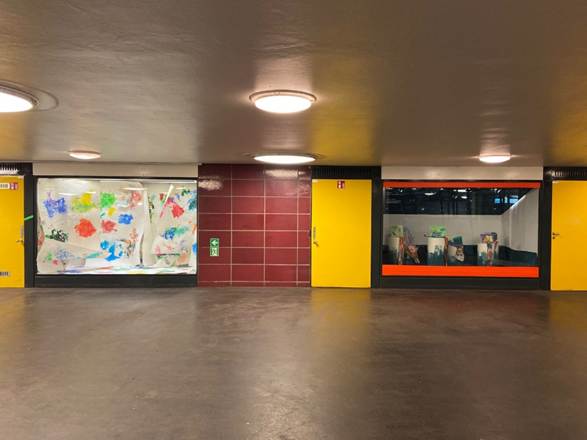
Two Vitrines
Two Titles
Two spheres
FeMaler.
Have
you seen the Stars Tonight.
Installation: Kees Koomen and Maarten Schepers
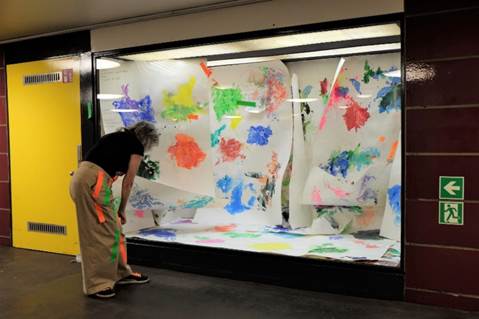
Preparations

Working on ‘Femaler’
(life size)
Studio: Ellen Rodenberg, The Hague, NL, June
2020
‘Have you seen the Stars Tonight’
Maquette: Maarten Schepers
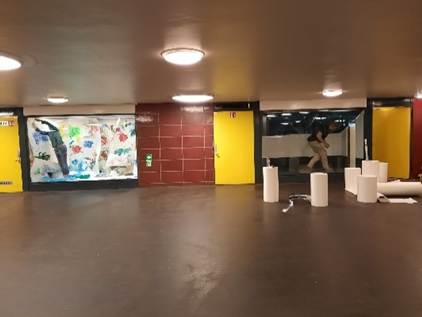
Building up: FeMaler
| Have you seen the Stars
Tonight
The exhibition opening:
FeMaler | Have you seen the Stars Tonight
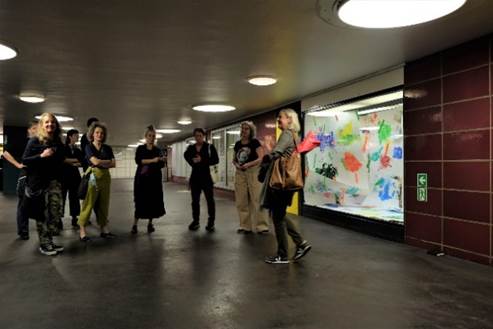
Isolde Nagel (A Trans) started the
openingsrituals
A Femmes City in U bahn Kleistpark,
Berlin.
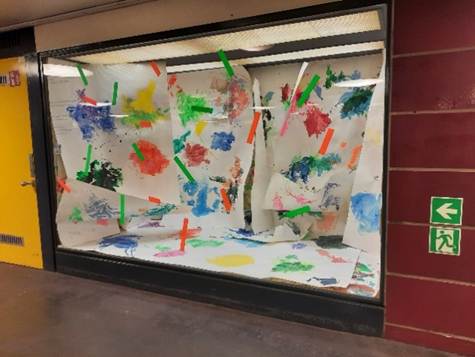
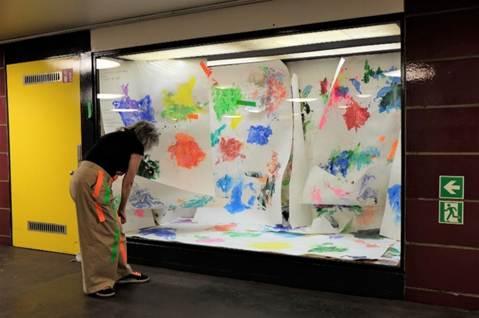
FeMaler
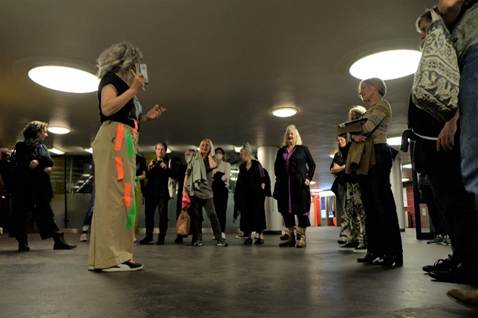
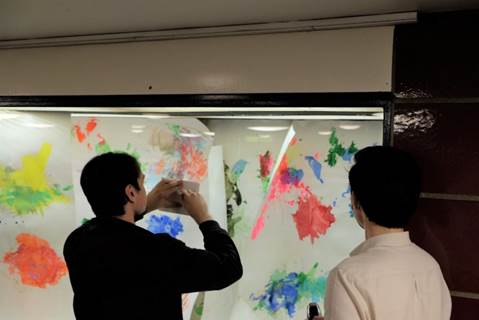
Opening action Ellen Rodenberg,
un-taping the window
Inviting the audience to draw what
they see / what they like.
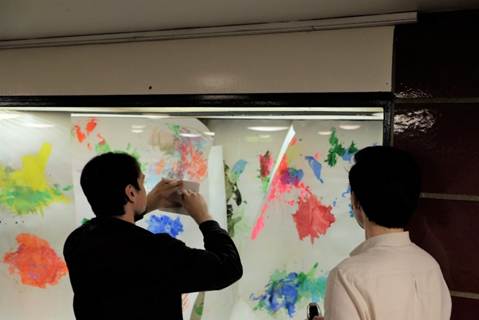
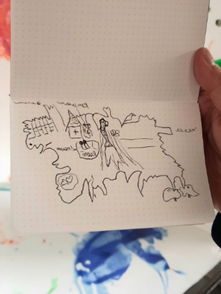
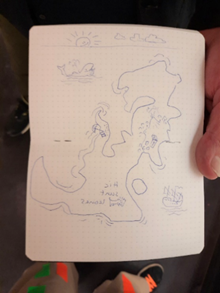
At the opening, the first drawings by
the audience were presented
And stories were shared.
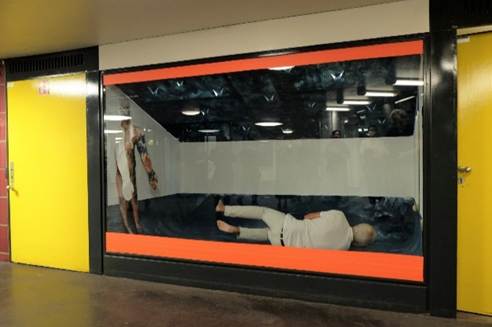
Performance Kees Koomen ‘Knocking on heaven’s Door’
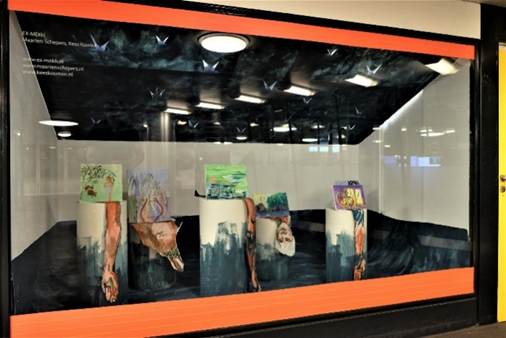
Have you seen
the Stars Tonight.
Het
project ‘A Femmes City’ van Atrans,
2020
Een
serie tentoonstellingen met Hedendaagse kunst in Berlijnse UBahn
vitrines.
A
Trans nodigde mij uit om de editie in oktober 2020 te verzorgen.
Midden
in de Corona Pandemie.
De
vitrines waren als een vanzelfsprekende
(veilige,
besmettings vrije) manier om
kunst in de openbare ruimte
doorgang te laten vinden.
Toen
ik de uitnodiging kreeg om een editie hiervan te verzorgen
kwamen er direct een aantal vragen bovendrijven.
Wat
is nu eigenlijk vrouwelijk?
Wat
zijn vrouwelijke eigenschappen?
Kan
je aan een kunstwerk zien of het door een vrouw is gemaakt?
Heeft
dit soort onderscheid nut?
Zo,
ja, hoe toon je dat dan?
Ellen Rodenberg & EX-MÊKH
Drie
mensen, 2
vitrines, 2 installaties,
Gezien
het onderwerp besloot ik het collectief EX-MÊKH
erbij te betrekken.
Het
begrip Man/vrouw hebben we als thema
niet eerder aangepakt.
Kunst
is toch vrij?
In
mijn eigen werk speelt het thema van
de traditionele rolverdeling
tussen man en vrouw al wel veel langer.
In
de gesprekken die de EX-MÊKH groep
door de jaren heen met elkaar voerde
werd me duidelijk dat vooral de manier van werken,
redeneren en beschouwen verschillend is.
Waar
zit het verschil? Karakter, gender, geslacht?
Onderscheid
maken is altijd arbitrair.
Ik
vroeg A Trans om een tweede vitrine
om in het licht van ‘A Femmes
City’
een arbitraire traditionele scheiding aan te brengen.
De
2 mannen zullen samen 1 vitrine bemannen en ik,
vrouw, zal de andere vitrine bemensen.
De
taal alleen al voelt onevenwichtig,
niet toereikend wat gelijkwaardigheid betreft.
De
titel FeMaler vat dit dilemma samen en
is tevens een statement.
Fe
femmes (Fr), female. Maler,
male,
maler(D), femaler (Eng).
Gedachten
en onderzoek
Simone
de Beauvoir, Luce Iragaray,
Joke
Hermsen brengen me in contact
met een nieuw bewustzijn op het gendervlak.
Om
dit gevoel en ideeën van verschil
verder te onderzoeken moet eerst het werk gewoon gemaakt.
Door
het leven te leven ontdek je pas
waar je je in essentie mee ‘bezig wil houden’.
Dit
is geen loze kreet.
De
betekenis hiervan is voelbaar, zichtbaar,
merkbaar in alles om ons heen.
Daarbij
is de situatie, locatie,
sfeer van de omgeving een essentiële factor
die van invloed is op hoe en waarmee je bezig bent als
mens.
Het
hoe, waarmee en waarom, dat is de vraag.
Beiden
zijn volgens mij individueel en politiek van aard.
Mannelijk
of vrouwelijk is een te grove vorm van typering.
Er
zijn zoveel factoren die uitmaken
hoe je handelt in een bepaalde gegeven situatie.
De
uitvoering ‘FeMaler’
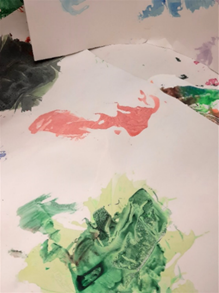
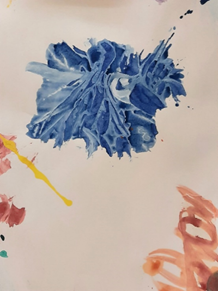
De afzonderlijke verf afdrukken op de stucloper
hebben vormen aangenomen
die voor meerdere interpretaties vatbaar zijn.
Pareidolie, Rorschach associaties geven
ruimte
aan individuele geheugenactiviteit.
Uitwisseling roept
onmiddellijk misverstanden en
dus de roep om uitgebreidere informatie.
Maar de taal maakt het
misverstand vaak alleen maar groter.
Waar
is de ruimte voor uitwisseling buiten taal?
De performance/workshop biedt via het tekenen de
gelegenheid
elkaar verhalen te vertellen
en
daarmee begrip voor elkaar te
vergroten.
De
uitvoering
Zowel
op deze site als van A Trans als op de EX-MÊKH site
is een verslag te zien.
De
omgang met taal, de invalshoek,
de schrijver;
drie keer anders.
https://ex-mekh.keeskoomen.nl/femaler
https://atrans.org/archive/a-trans-feat-ellen-rodenberg-ex-mekh-femaler/
The ‘A Femmes City’ project by A Trans, 2020
A series of exhibitions featuring contemporary art
in Berlin U-Bahn display cases.
A Trans invited me to curate the October 2020
edition.
Right in the middle of the coronavirus pandemic.
The display cases were seen as a natural
(safe, infection-free) way to showcase art in
public spaces.
When I received the invitation to curate an edition
of this,
several questions immediately came to mind.
What exactly is feminine?
What are feminine characteristics?
Can you tell from a work of art whether it was
created by a woman?
Is this kind of distinction useful?
If so, how do you demonstrate it?
Ellen Rodenberg & EX-MÊKH
3 people, 2 display cabinets, 2 installations,
Given the subject matter,
I decided to invite the EX-MÊKH collective to
participate.
We haven’t tackled the concept of ‘man/woman’
as a theme before.
Art is free, isn’t it?
In my own work, the theme of the traditional divide
between
men and women have been present for much longer.
In the discussions the EX-MÊKH group has had over
the years,
it became clear to me that it is primarily the way
of working,
arguing and thinking that differs.
Where does the difference lie? Character, gender,
biological sex?
Making distinctions is always arbitrary.
I asked A Trans for a second display window
in order to introduce an
arbitrary traditional division
in the context of ‘A Femmes City’.
The two men will share one display window and I,
a woman, will man the other.
The language itself feels unequal,
inadequate when it comes to diversity.
The title FeMaler
encapsulates this dilemma
and is also a statement.
Fe femmes (Fr), female. Maler, male,
maler (D), femaler
(Eng).
Thoughts and research
Simone de Beauvoir, Luce Irigaray and
Joke Hermsen have introduced me to a new awareness
regarding issues of gender.
To further explore this feeling and these ideas of
difference,
the work must first be made ordinary.
It is only by living life that you discover
what you essentially ‘want to engage with’.
This is no empty slogan.
Its significance is felt, seen and noticed
in everything around us.
Moreover, the situation, location and
atmosphere of the environment are essential factors
that influence how and what you engage with
as a human being.
The how, the what and the why – that is the
question.
In my view, both are individual and political in
nature.
Male or female is too rough a form of typification.
There are so many factors that determine
how you act in a given
situation.
The
‘FeMaler’ installation
The individual paint
prints have taken on forms
open to multiple
interpretations.
Pareidolia and
Rorschach-like associations give scope
for individual memory
activity.
Exchange immediately
gives rise to misunderstandings and
thus a call for further
information.
But language often only
serves to deepen the misunderstanding.
We merely share
existing categories and
classifications with
one another.
Where is the space?
The
exhibition and performances
A report can be viewed
on both the Atrans website and
the EX-MÊKH website.
The use of language,
the perspective,
the writer;
three times different.
Erf 2020